There’s something irresistibly magical about the aroma of kimchi soup wafting through your kitchen. Picture this: a steaming bowl filled with vibrant, spicy broth, tender vegetables, and the unmistakable tang of fermented kimchi. crispy battered cod It’s like a warm hug from your favorite aunt who always knows how to cheer you up. This soup is not just a meal; it?s an experience that brings warmth to cold days and comfort during those Netflix binge sessions.
Jump to:
- Ingredients for kimchi soup
- How to Make kimchi soup
- <strong>Perfecting the Cooking Process</strong>
- <strong>Add Your Touch</strong>
- <strong>Storing & Reheating</strong>
- FAQs
- What is kimchi soup?
- How do you make kimchi soup?
- Can I use fresh kimchi for kimchi soup?
- How long does kimchi soup last in the fridge?
- Conclusion for kimchi soup
- 📖 Recipe Card
I remember the first time I had kimchi soup; it was during a particularly dreary winter, and my friend insisted I try it. One slurp in, and I was hooked. It felt like fireworks were dancing on my taste buds! Perfect for family gatherings or a cozy night in, this dish promises to elevate any occasion. But let’s get real?whether you’re looking to impress guests or just want to treat yourself after a long day, this kimchi soup is your ticket to flavor town. For more inspiration, check out this cheesesteak pasta dish recipe.
Why You'll Love This Recipe
- This kimchi soup is incredibly easy to whip up, making dinner less stressful.
- The bold flavors will dance on your palate, leaving you craving more.
- Its vibrant colors make it a feast for the eyes as much as for the stomach.
- Plus, it?s super versatile?you can throw in whatever veggies you have lying around!
Ingredients for kimchi soup
Here’s what you’ll need to make this delicious dish:
- Kimchi: Use homemade or store-bought; just ensure it’s packed with flavor and spice for that authentic kick.
- Tofu: Firm tofu works best; it will soak up all the flavors while maintaining its structure in the soup.
- Vegetable Broth: Opt for low-sodium vegetable broth for a balanced flavor without overwhelming saltiness.
- Green Onions: These add a fresh crunch?slice them thinly for garnish and additional flavor.
- Garlic: Minced garlic gives the soup an aromatic kick that complements the spiciness of the kimchi beautifully.
- Soy Sauce: A splash adds depth and umami; choose low-sodium if you’re watching your salt intake.
For the Vegetables:
- Mushrooms: Any variety will do; they add texture and absorb all those delicious broth flavors.
- Cabbage: A handful of shredded cabbage brings additional crunch and nutrition?win-win!
The full ingredients list, including measurements, is provided in the recipe card directly below.
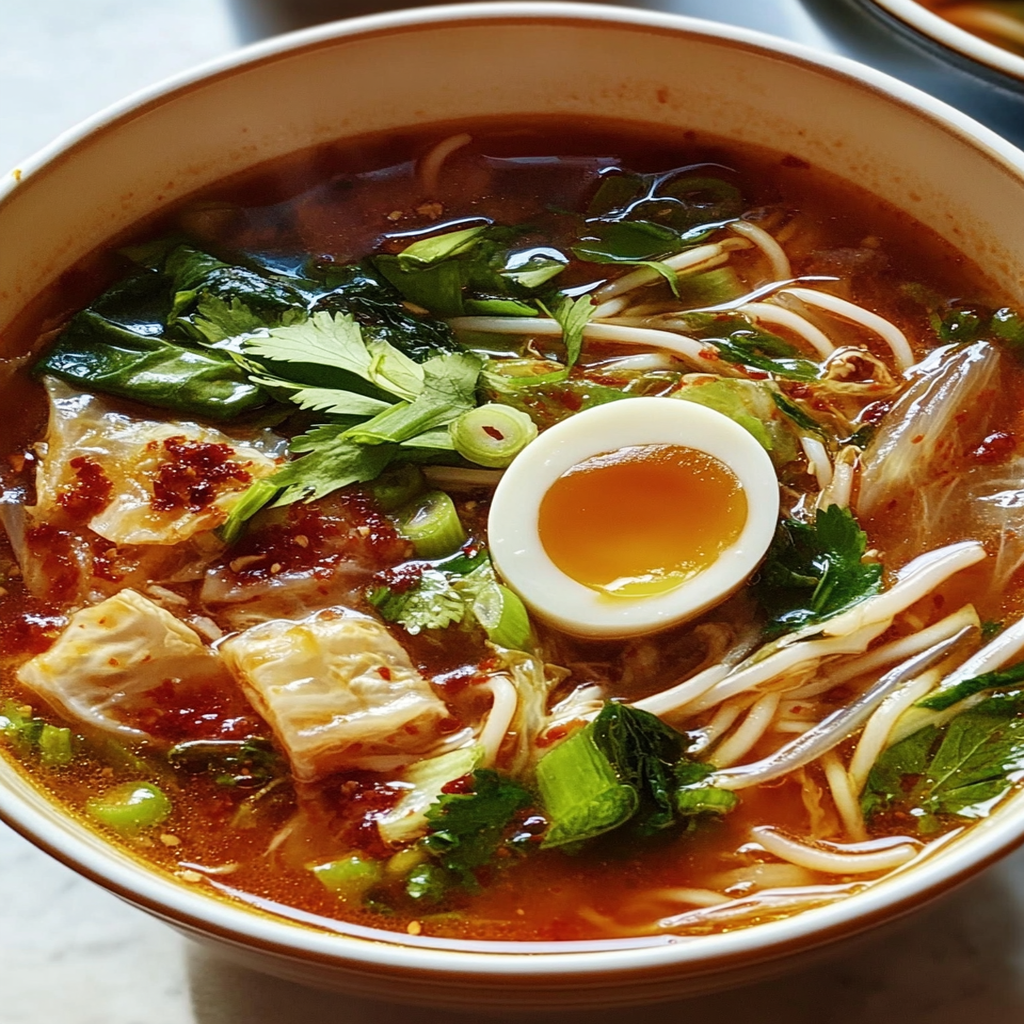
How to Make kimchi soup
Follow these simple steps to prepare this delicious dish:
Step 1: Saut? Aromatics
In a large pot over medium heat, add a splash of oil and saut? minced garlic until fragrant?about one minute. Your kitchen will start smelling like heaven!
Step 2: Add Kimchi
Throw in your kimchi (the star of the show) along with some extra broth if it looks too thick. Stir everything around so those flavors mingle beautifully?it’s like a party in there!
Step 3: Pour in Vegetable Broth
Add vegetable broth and bring it to a gentle boil. The bubbling sound should excite your senses like popcorn popping at the movies!
Step 4: Toss in Tofu and Veggies
Carefully add cubed tofu, sliced mushrooms, and shredded cabbage into the pot. Let everything simmer for about ten minutes until all veggies are tender but still vibrant.
Step 5: Seasoning Time
Taste your masterpiece! Add soy sauce to enhance that umami flavor. If you?re feeling adventurous (and brave), throw in some chili flakes for extra heat!
Step 6: Serve It Up
Ladle your delicious kimchi soup into bowls and top with chopped green onions. Consider serving alongside rice or crusty bread for an unbeatable combo.
Transfer to plates and drizzle with sauce for the perfect finishing touch. Enjoy every spoonful of this hearty delight!
You Must Know
- This delightful kimchi soup not only warms your soul but also packs a punch of flavor.
- It’s the perfect dish for meal prep, and you can easily adjust ingredients to suit your taste.
- Serve it hot, and savor the vibrant colors and comforting aroma that fills your kitchen.
Perfecting the Cooking Process
Start by saut?ing garlic and ginger in a pot, then add your kimchi to infuse flavor. Pour in broth and let it simmer while you prepare any additional proteins or vegetables. This sequence ensures every element shines in your kimchi soup.
Add Your Touch
Feel free to swap out proteins like tofu or chicken, or even throw in some mushrooms for an earthy flavor. Add seasonings like sesame oil or chili flakes for extra heat, allowing your soup to reflect your culinary personality. crispy chicken tenders.
Storing & Reheating
Store leftover kimchi soup in an airtight container in the fridge for up to three days. To reheat, simply warm it on the stove over medium heat until bubbling, keeping that fresh taste intact.
Chef's Helpful Tips
- Always use well-fermented kimchi for depth of flavor; fresher versions might not deliver the same punch.
- Adjust the spice level according to preference; remember, you can always add more later.
- Don’t skip simmering; this step melds all those delicious flavors together beautifully.
Sometimes, I whip up a batch of kimchi soup when friends come over, and their faces light up with joy at the first sip. It?s moments like these that make cooking so rewarding!
FAQs
What is kimchi soup?
Kimchi soup, also known as kimchi jjigae, is a popular Korean dish made from fermented kimchi, tofu, vegetables, and often pork or other proteins. It?s known for its spicy and tangy flavor profile. This hearty soup is not only comforting but also packed with nutrients that come from the rich ingredients. Many people enjoy it as a meal on its own or served over rice.
How do you make kimchi soup?
To make kimchi soup, start by saut?ing garlic and onion in a pot until fragrant. Add your chopped kimchi and protein of choice, stirring well. Pour in water or broth and bring to a boil. spicy Jamaican jerk sauce Then, add tofu and let it simmer until everything is cooked through. Season with soy sauce or gochugaru for extra flavor. Serve hot with rice for a complete meal.
Can I use fresh kimchi for kimchi soup?
While traditional recipes call for fermented kimchi, you can use fresh kimchi if you prefer a milder flavor. The fermentation process adds depth to the soup that fresh kimchi lacks. However, if you choose to use fresh kimchi, consider adding a bit more seasoning like chili flakes or vinegar to enhance the taste. The key is to adjust according to your flavor preference. For more inspiration, check out this one-pot soup recipe recipe.
How long does kimchi soup last in the fridge?
Kimchi soup can last in the refrigerator for about 3 to 5 days when stored properly in an airtight container. When reheating, make sure it?s heated thoroughly to ensure food safety. You may notice that the flavors develop even further after a day or two in the fridge, making it possibly even tastier upon reheating.
Conclusion for kimchi soup
In summary, kimchi soup is a flavorful and nutritious dish that can easily become a staple in your kitchen. The combination of fermented kimchi with tofu and protein creates a satisfying meal full of umami goodness. dill pickle macaroni salad Whether you opt for traditional recipes or customize it with your favorite ingredients, this dish is versatile and delicious. Enjoy serving it hot alongside rice for a complete dining experience!
Did You Enjoy Making This Recipe? Please rate this recipe with ⭐⭐⭐⭐⭐ or leave a comment.
📖 Recipe Card
PrintKimchi Soup (Kimchi Jjigae)
- Total Time: 30 minutes
- Yield: Serves 4
Description
Kimchi soup, or kimchi jjigae, is a delightful and comforting Korean dish that brings warmth and flavor to your table. This hearty soup combines the spicy tang of fermented kimchi with tender tofu and vibrant vegetables, creating a nourishing meal perfect for cozy nights or gatherings with friends. Easy to prepare and highly customizable, each bowl offers a unique taste experience that will leave you craving more.
Ingredients
- 1 cup kimchi (homemade or store-bought)
- 8 oz firm tofu, cubed
- 4 cups low-sodium vegetable broth
- 2 green onions, sliced thinly
- 3 cloves garlic, minced
- 2 tbsp low-sodium soy sauce
- 1 cup mushrooms (any variety), sliced
- 1 cup cabbage, shredded
Instructions
- In a large pot over medium heat, saut? minced garlic in a splash of oil until fragrant (about 1 minute).
- Add the kimchi and stir for a few minutes, adding extra broth if needed.
- Pour in the vegetable broth and bring to a gentle boil.
- Add cubed tofu, sliced mushrooms, and shredded cabbage. Simmer for about 10 minutes until vegetables are tender.
- Season with soy sauce and adjust spice levels with chili flakes if desired.
- Serve hot topped with green onions; enjoy with rice or crusty bread.
- Prep Time: 10 minutes
- Cook Time: 20 minutes
- Category: Main
- Method: Saut?ing/Simmering
- Cuisine: Korean
Nutrition
- Serving Size: 1 serving
- Calories: 190
- Sugar: 4g
- Sodium: 800mg
- Fat: 10g
- Saturated Fat: 1.5g
- Unsaturated Fat: 7g
- Trans Fat: 0g
- Carbohydrates: 15g
- Fiber: 4g
- Protein: 12g
- Cholesterol: 0mg